
Mouse Secondary Antibodies

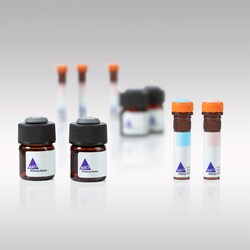
Miltenyi Biotec, Inc. CD39-VioBright 515, mouse, REA870, 100 t
Identification and enumeration of CD39+ cells by flow cytometry.
This product is subject to the following: Miltenyi Biotec, Inc. Terms and Conditions of Sale For Products and Services

Sino Biological Recombinant Mouse CD20 Protein (VLP, Full-length, His Tag)
A DNA sequence encoding the Mouse MS4A1-VLP (Full Length) (P19437) (Met1-Pro291) was fused with a polyhistidine tag at the C-terminus. This protein was prepared using our VLP platform.As an innovative technology platform, VLPs are generated through the self-assembly of viral proteins in HEK293 cells. This process efficiently integrates membrane proteins onto the VLP surface, preserving their native conformation and yielding soluble, high-concentration proteins that are ideally suited for immunization and antibody screening.

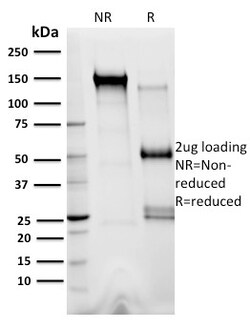
Biotium XRCC3(10F1/6), Biotin conjugate, 0.1mg/mL
The x-ray repair cross-complementing (XRCC) proteins are responsible for efficiently repairing and maintaining genetic stability following DNA base damage. These genes share sequence similarity with the yeast DNA repair protein Rad51. XRCC1 is a protein that facilitates the DNA base excision repair pathway by interacting with DNA ligase III and DNA polymerase to repair DNA single-strand breaks. XRCC2 and XRCC3 are both involved in maintaining chromosome stability during cell division. XRCC2 is required for efficient repair of DNA double-strand breaks by homologous recombination between sister chromatids, and XRCC3 interacts directly with Rad51 to cooperate with Rad51 during recombinational repair. XRCC4 is an accessory factor of DNA Ligase IV that preferentially binds DNA with nicks or broken ends. XRCC4 binds to DNA Ligase IV and enhances its joining activity, and it is also involved in V(D)J recombination. Any defect in one of the known components of the DNA repair/V(D)J re

Biotium Thyroglobulin (Thyroidal Cell Marker) (rTGB24), 0.2mg/mL
Thyroglobulin is a 660 kDa dimeric pre-protein with multiple glycosylation sites. It is produced by and processed within the thyroid gland to produce the hormone thyroxine and triiodothyronine. Prior to forming dimers, thyroglobulin monomers undergo conformational maturation in the endoplasmic reticulation. The vast majority of follicular carcinomas of the thyroid will give positive immunoreactivity for anti-thyroglobulin even though sometimes only focally. Poorly differentiated carcinomas of the thyroid are frequently anti-thyroglobulin negative. Adenocarcinomas of other-than-thyroid origin do not react with this antibody. This antibody is useful in identification of thyroid carcinoma of the papillary and follicular types. Presence of thyroglobulin in metastatic lesions establishes the thyroid origin of tumor. Anti-thyroglobulin, combined with anti-calcitonin, can identify medullary carcinomas of the thyroid. Furthermore, anti-thyroglobulin, combined with anti-TTF1, can be a
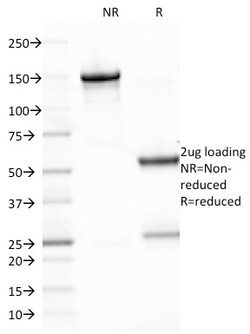
Biotium Epstein-Barr Virus (LMP-1)(CS2), 0.2mg/mL
This antibody is a mixture of four different monoclonal antibodies. This antibody is specific to 60 kDa latent membrane protein (LMP-1) encoded by the BNLF1 gene of the EBV. Each clone reacts with different epitopes on the hydrophilic C-terminus of the cytoplasmic domain of LMP-1. This antibody stains strongly with EBV-positive lymphoblastoid cell lines and EBV infected B cell immunoblasts in infectious mononucleosis. EBV, also designated human herpesvirus 4 (HHV-4), is a member of the herpesvirus family and is one of the most common human viruses. EBV infects B cells and, though often asymptomatic, it can cause infectious mononucleosis, a disease characterized by fatigue, fever, sore throat and muscle soreness. Primary antibodies are available purified, or with a selection of fluorescent CF Dyes and other labels. CF Dyes offer exceptional brightness and photostability. Note: Conjugates of blue fluorescent dyes like CF405S and CF405M are not recommended for detecting low
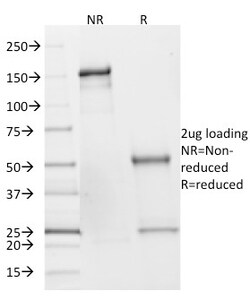
Biotium SDHB (Succinate Dehydrogenase B) (Pheochromocytoma Marker)(SDHB/2382), CF568 conjugate, 0.1mg/mL
Succinate dehydrogenase (SDH) is Complex II in the mitochondria, vital for mitochondrial electron transport, as well as Krebs cycle function. Four subunits comprise the SDH protein complex: a flavochrome subunit (SDHA), an iron-sulfur protein (SDHB) and two membrane-bound subunits (SDHC and SDHD) anchored to the inner mitochondrial membrane. The SDH complex functions as a tumor suppressor. Loss of any subunit proteins lead to destabilization of the complex and tumor formation. Antibody to SDHB is helpful in the identification of phaeochromocytomas, paragangliomas and GIST. Primary antibodies are available purified, or with a selection of fluorescent CF Dyes and other labels. CF Dyes offer exceptional brightness and photostability. Note: Conjugates of blue fluorescent dyes like CF405S and CF405M are not recommended for detecting low abundance targets, because blue dyes have lower fluorescence and can give higher non-specific background than other dye colors.
Biotium SOX2 (Embryonic Stem Cell Marker)(rSOX2/1792), CF568 conjugate, 0.1mg/mL
SOX2 is required for stem cell maintenance in the central nervous system, and it also regulates gene expression in the stomach. SOX2 is necessary for regulating multiple transcription factors that affect Oct 3/4 expression. An essential function of SOX2 is to stabilize embryonic stem cells in a pluripotent state by maintaining the requisite level of Oct 3/4 expression. Reportedly, SOX2 is associated with aggressive phenotypes of breast, head and neck, gastric, colorectal, bladder, and small cell lung cancers. However, SOX2 is expressed in a high percentage of lung squamous cell carcinomas and has been shown to be an independent favorable prognostic marker. Primary antibodies are available purified, or with a selection of fluorescent CF Dyes and other labels. CF Dyes offer exceptional brightness and photostability. Note: Conjugates of blue fluorescent dyes like CF405S and CF405M are not recommended for detecting low abundance targets, because blue dyes have lower fluoresc
Biotium Cytokeratin, pan(KRTL/1077 + KRTH/1076), 0.2mg/mL
Twenty human keratins are resolved with two-dimensional gel electrophoresis into acidic (pI 6.0) subfamilies. This antibody cocktail recognizes acidic (Type I or LMW) and basic (Type II or HMW) cytokeratins, which include CK1, CK3, CK4, CK5, CK6, CK8, CK10, CK14, CK15, CK16, and CK19. Many studies have shown the usefulness of keratins as markers in cancer research and tumor diagnosis. KRTL/KRTH is a broad spectrum anti pan-cytokeratin antibody cocktail, which differentiates epithelial tumors from non-epithelial tumors e.g. squamous vs. adenocarcinoma of the lung, liver carcinoma, breast cancer, and esophageal cancer. It has been used to characterize the source of various neoplasms and to study the distribution of cytokeratin containing cells in epithelia during normal development and during the development of epithelial neoplasms. This antibody stains cytokeratins present in normal and abnormal human tissues and has shown high sensitivity in the recognition of epithelial cells and
Biotium Prohibitin (Mitochondrial Marker)(PHB/1881), CF488A conjugate, 0.1mg/mL
Recognizes a protein of 30 kDa which is identified as Prohibitin, an evolutionarily conserved protein with homologues found in yeast to man. It is located in the inner membrane of mitochondria. Although prohibitin mRNA and protein expression occurs throughout the cell cycle, maximum levels are detected during the G1/S phase transition and minimum levels are seen in S phase and the G2/mitosis boundary. Prohibitin is located exclusively in the mitochondria with the highest concentration on the inner membrane. Prohibitin is an ideal mitochondrial marker. It shows antiproliferative activity and has been proposed to play a role in normal cell cycle regulation, replicative senescence, cellular immortalization, and tumor suppression. Primary antibodies are available purified, or with a selection of fluorescent CF Dyes and other labels. CF Dyes offer exceptional brightness and photostability. Note: Conjugates of blue fluorescent dyes like CF405S and CF405M are not recommended fo



![Biolegend Spark PLUS YG581 anti-mouse/human CD11b [M1/70] Isotype Rat IgG2b Reactivity Mouse Human Cynomolgus Rhesus Apps FC Size 25 ug](https://assets.fishersci.com/TFS-Assets/CCG/product-images/5000496101-logo.png-250.jpg)
Biolegend Spark PLUS YG581 anti-mouse/human CD11b [M1/70] Isotype Rat IgG2b Reactivity Mouse Human Cynomolgus Rhesus Apps FC Size 25 ug
Spark PLUS YG581 anti-mouse/human CD11b [M1/70] Isotype Rat IgG2b Reactivity Mouse Human Cynomolgus Rhesus Apps FC Size 25 ug

Cayman Chemical 24a-ethyl Cholesterol 5mg
A phytosterol with diverse biological activities; protects lard from thermal oxidation at 0.02 and 0.04%; induces glucose uptake and lipolysis in primary rat differentiated adipocytes and adipogenesis in primary rat preadipocytes at 100 µM; cytotoxic to MCF-7 breast cancer cells (IC50 = 264.83 µM); increases protein levels of the glucocorticoid receptor in human bronchial smooth muscle cells cultured with TGF-β1; prevents pulmonary fibrosis in a mouse model of allergic asthma induced by ovalbumin; dietary administration reduces cholesterol-induced increases in liver weight and hepatic cholesterol levels in rabbits; has been used in the generation of LNPs for the delivery of mRNA in vitro and in vivo
Cayman Chemical ForsythosIde A 10mg
A phenylethanoid glycoside; active against E. coli, P. aeruginosa, and S. aureus (MICs = 38.33, 38.33, and 76.67 UG/ml, respectively); scavenges DPPH radicals (EC50 = 6.3 UG/ml); prevents Aβ (25-35)-induced apoptosis in PC12 cells at 10 and 25 µM; reduces cigarette smoke-induced increases in BALF levels of TNF-α, IL-6, and IL-1β and neutrophil and macrophage infiltration in a mouse model of COPD at 15, 30, and 60 mg/kg per day; decreases the latency mice take to find the platform in the Morris water maze in the SAMP8 model of rapid aging and dementia at 120 and 240 mg/kg per day
Cayman Chemical a-MSH AcIdhumnmouserat 10mg
An acid form of α-MSH; selectively binds to MC1R over MC3R, MC4R, and MC5R in COS-1 cells expressing the human receptors (Kis = 0.0012, 0.0829, 3.05, and 18.2 µM, respectively)